
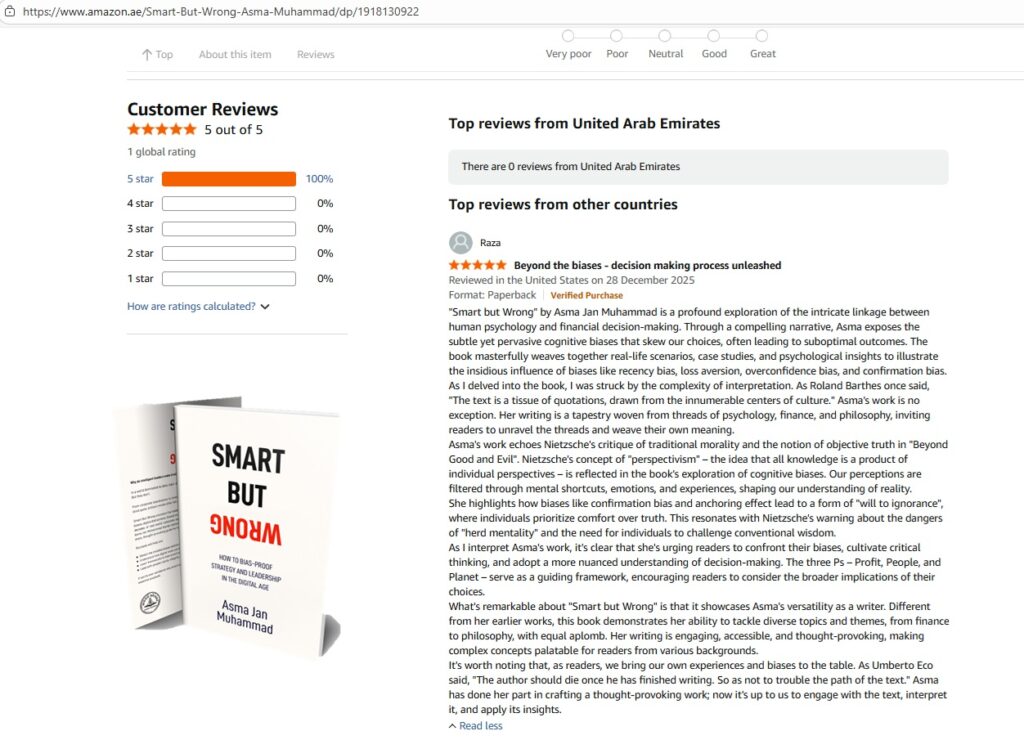
One of the most meaningful moments for an author is seeing how a reader interprets the work—often in ways that reveal its purpose more clearly than the author ever could.
A recent Amazon review described Smart But Wrong not as a finance book, but as a mirror—one that reflects how intelligent, well-intentioned people continue to fall into familiar cognitive traps.
That observation resonated deeply.
This book was never written to offer perfect formulas or definitive answers.
It was written to spark reflection—on bias, judgment, and the quiet decisions that shape outcomes in boardrooms, careers, and everyday life.
If a book encourages you to pause before your next confident decision, to question certainty rather than chase it, then it has done what it set out to do.
After all, the most powerful books don’t change what we think.
They change how we think.
